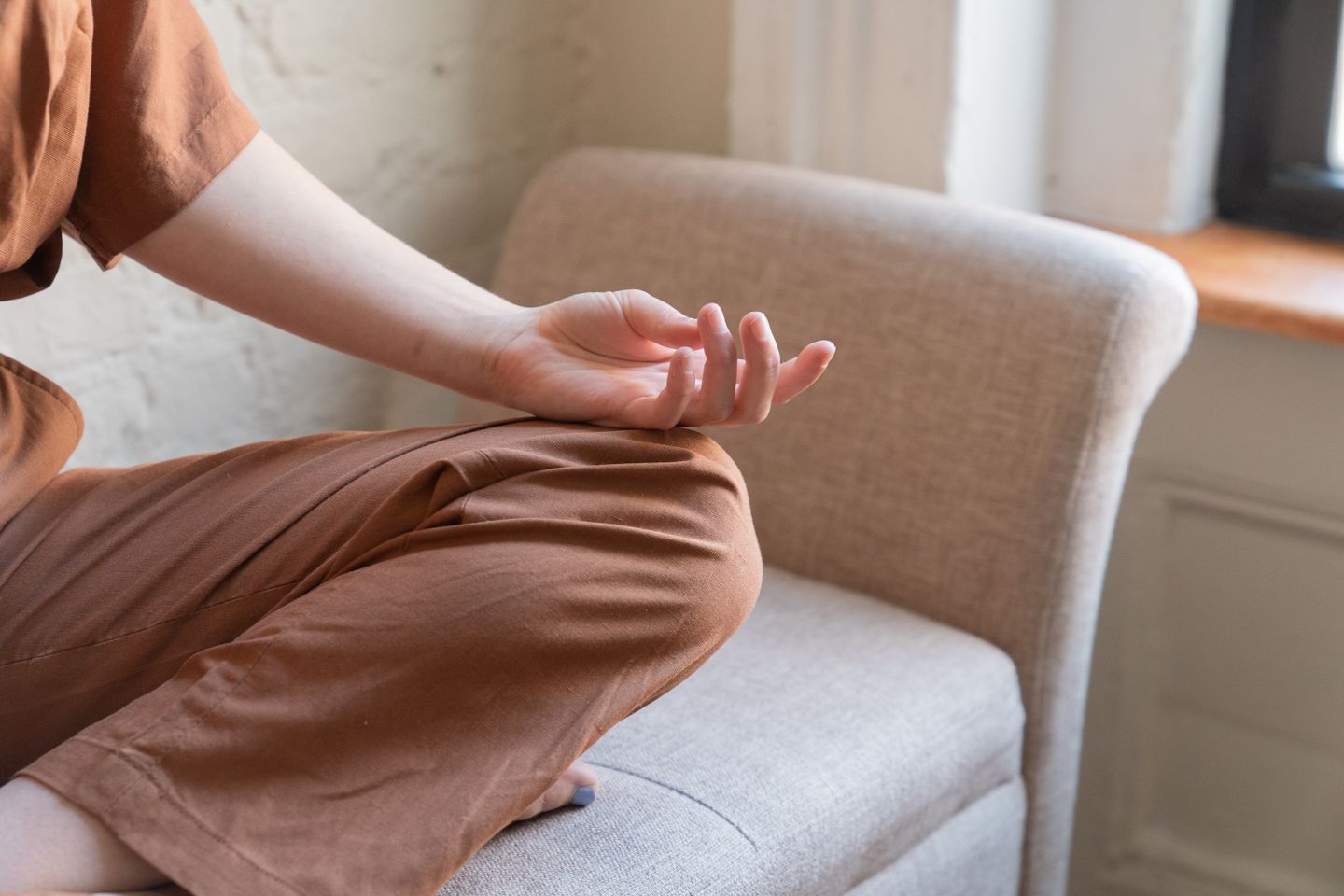
Choose the order that fits
A walk can come before or after a home practice. Choose the order according to your day: perhaps a few movements before going outside, or a brief seated session after returning. Neither order needs to become a fixed rule.
Keep both parts modest at first. A familiar walk and a short practice are easier to arrange than two ambitious sessions. Consider daylight, weather, your available time, and how much effort feels appropriate before committing to a route.
Create a clear handover
If the walk comes first, put away outdoor shoes and clear the practice area before moving onto the mat. Take a comfortable seated or standing pause. Let your breathing return to an easy natural rhythm without directing it into a counting exercise.
If practice comes first, finish with a few ordinary steps in the room. Put on suitable footwear and gather what you need for the route. Give yourself time to move between activities rather than treating the transition as something to rush through.
Keep the mat portion familiar
Use movements you can recall without checking a screen repeatedly. Seated shoulder exploration, a comfortable standing reach, and supported weight shifts can make a simple combination. Choose two or three rather than building a sequence around every part of the body.
You can stay entirely seated if that suits the day, or skip the mat portion when the walk is enough. The pairing is a convenient option, not a requirement. Keep enough energy and attention for your usual activities afterward.
Make room for changing days
On a busy day, choose one part of the routine. On another day, leave a longer gap between them. Consistency can mean returning to the same general idea while allowing the details to vary, rather than completing an identical checklist.
Notice what makes the combination practical: a nearby route, equipment that is easy to reach, or a clear ending time. Preserve those details. A routine works best when it connects naturally with daily life instead of adding another task that needs perfect conditions.
A few common questions
How long should the walk be?
Choose a familiar distance and comfortable effort that fit your circumstances. This guide does not prescribe a training duration; its focus is arranging two everyday activities conveniently.
Must I stretch after walking?
This routine does not require stretching after every walk. Add familiar comfortable movements if you want them, or finish the walk and return to the rest of your day.
Published by the Kirioto journal.