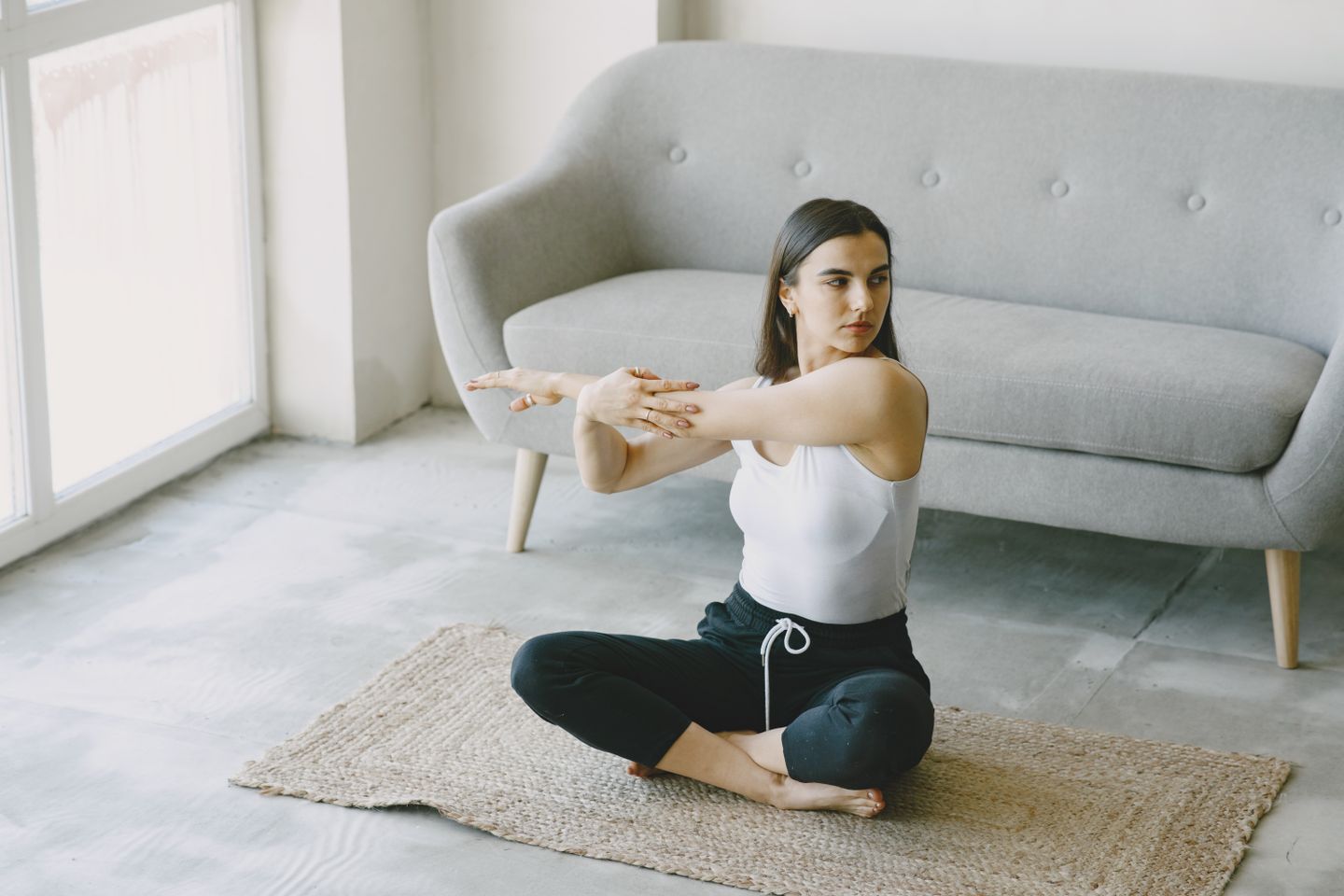
Choose the kind of session
Look at your planned sequence and identify any position that places substantial weight through your hands. Decide ahead of time whether you want to include it. A practice built around seated movement and supported standing can be complete on its own.
You might replace a hands-and-knees passage with a seated exploration of the shoulders or an easy standing reach. Keep the replacement simple enough to remember. You do not need a pose that looks similar to preserve the rhythm of the session.
Explore hands without pressure
Rest your forearms on your thighs or a table at a comfortable height. Open and close your fingers softly, then relax them. Let the movement remain easy; there is no need to squeeze firmly or stretch each finger far apart.
Turn your palms upward and then downward within a small range, keeping the rest of the arm comfortable. Pause and notice the difference between moving and resting. Leave out any movement that feels unpleasant rather than repeating it to seek a change.
Use the room thoughtfully
For a standing variation, face a wall and place your hands lightly against it if that position feels comfortable. You can also keep your hands at your sides. Choose a distance that lets you remain upright without leaning heavily into support.
Arrange blocks or other practice props before you begin, and use them only for their intended stable purpose. Raising the hands does not automatically make every position suitable. Judge each option by your comfort and ability to leave it smoothly.
Keep substitutions ordinary
Write a short version of your practice that includes the choices you prefer: seated shoulders, standing side reach, a supported weight shift, and a quiet finish. Having a ready version reduces the need to improvise while following a longer guide.
If hand or wrist discomfort changes your ability to do everyday activities, seek individual guidance from an appropriate professional. General yoga articles cannot assess its cause. In the meantime, your practice can remain flexible about which positions it includes.
A few common questions
Do I need to practice a plank?
No. This session does not require a plank or any other hand-supported pose. Choose movements that let you explore comfortably without adding an unwanted demand.
Will these movements fix wrist pain?
This guide makes no treatment claim. It offers general practice choices, not an assessment or remedy. Persistent or concerning discomfort calls for qualified personal guidance.
Published by the Kirioto journal.